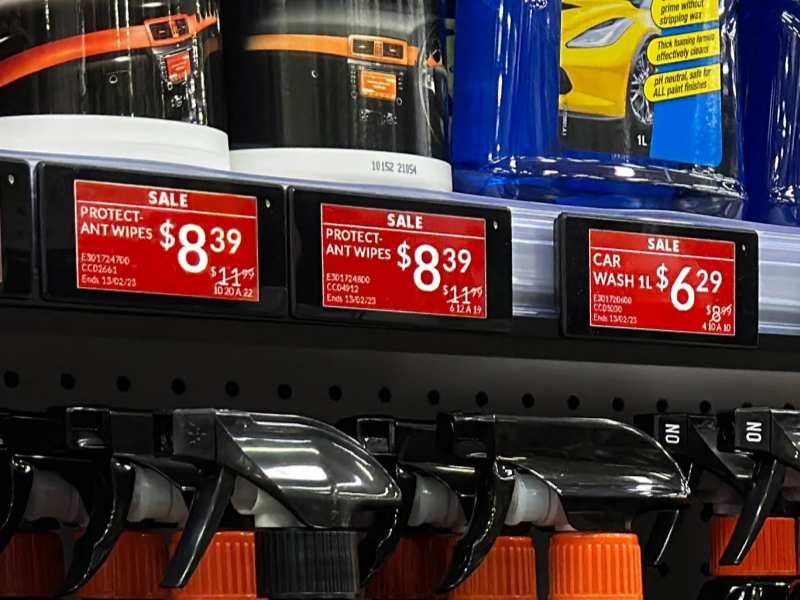
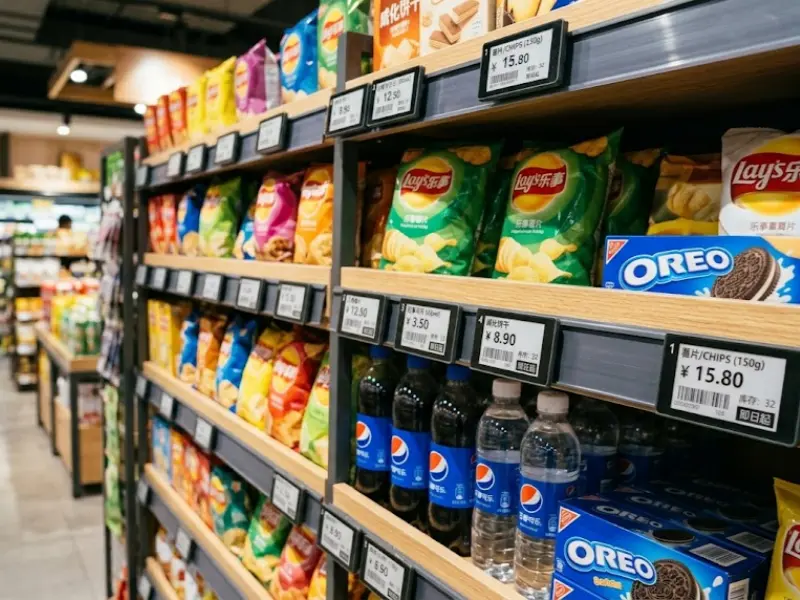
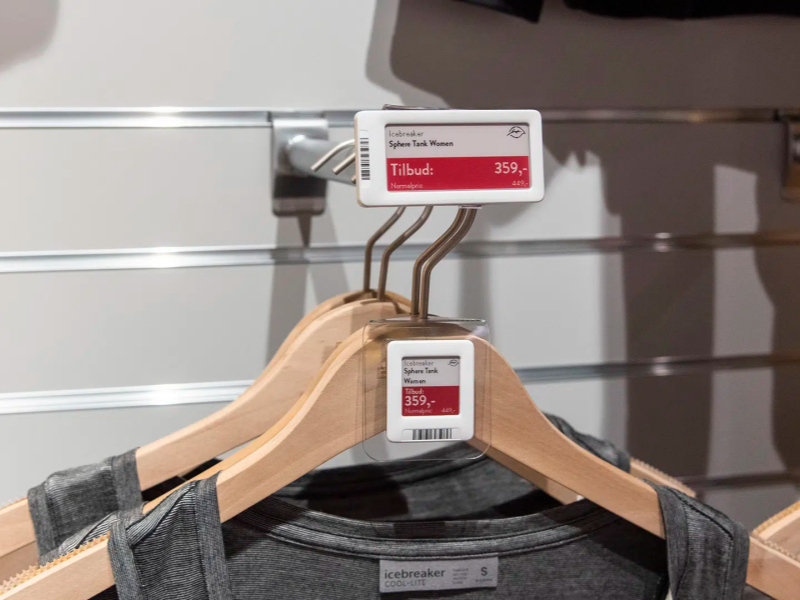
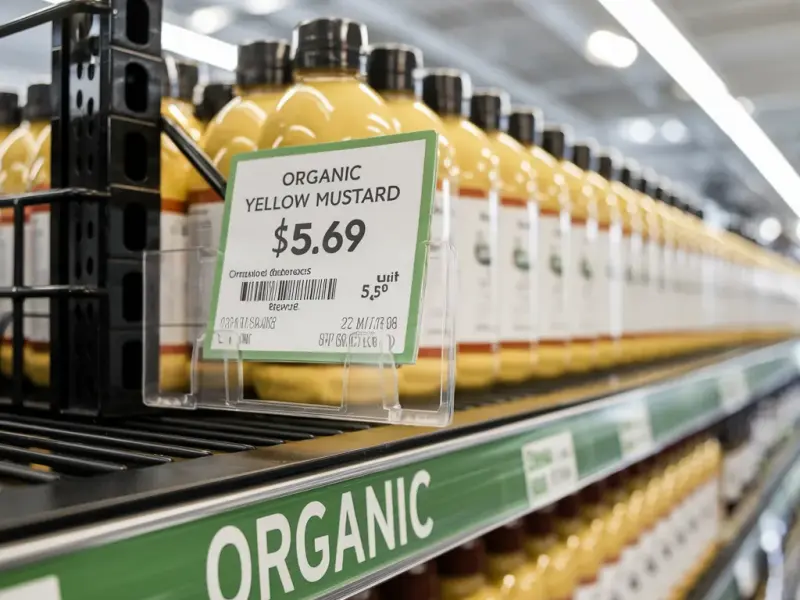
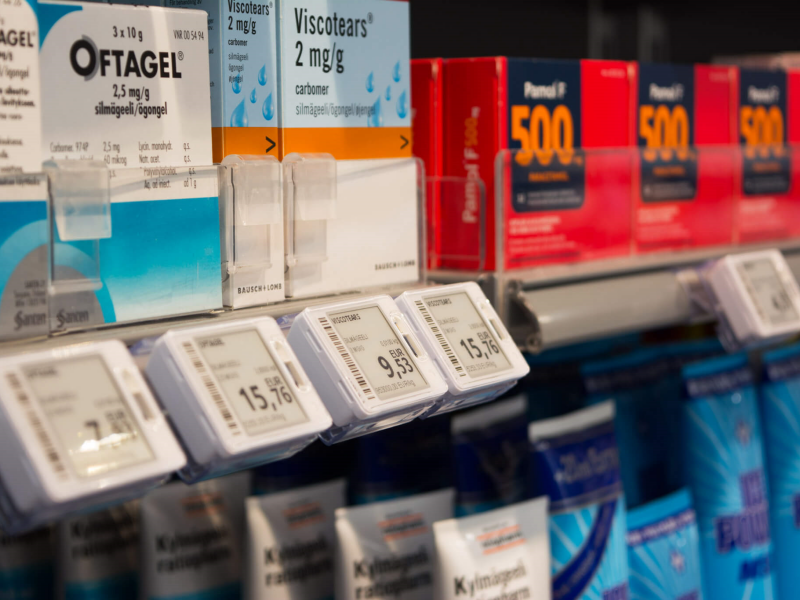
Iithegi zamaxabiso eSupermarket zombane - zikwabizwa ngokuba ziileyibhile zeshelufu zombane (ESLs) - buyisela iithegi zeshelufu zephepha nge-e{2}}i-inki okanye imiboniso ye-LCD ehlaziyiweyo ngaphandle kwamacingo. Kwiindawo eziphezulu ze{4}}SKU zegrosari, bawacutha amaxabiso{5}}ayamene nabasebenzi kakhulu (ii-akhawunti zomthengisi ezizimeleyo kunye nomthengisi{6}}izifundo ezigunyazisiweyo zixela ukucutha kuluhlu lwama-60-80%), baphelise ishelufu{9}}ukuze{10}}ukukhangela intlawulo yexabiso eliqhelekileyo ukuya kwiinyanga ezi-2 zokungangqinelani, kunye nexabiso eli-2 lokungangqinelani. I-Walmart iye yaziqengqela malunga neevenkile ezingama-2,300 zase-US, kunye namatyathanga aseYurophu aqhuba ukwamkelwa ngaphezulu kwe-80%. Itekhnoloji ngoku ixhaphakile ngokwaneleyo kangangokuba abathengisi abasesephepheni baya besanda ukusebenza kwindawo engalunganga.
Hamba indlela yobisi kwi-Whole Foods okanye kwi-Amazon Fresh indawo namhlanje kwaye izikrini ezincinci zifakwe emphethweni weshelufu zikhangeleka ziphantse zafana neethegi zephepha - ude ubukele unyuso oluya bukhoma kwaye zonke iileyibhile zihlaziywa ngaxeshanye, kungabikho mntu uchukumisa nto. Olo tshintsho ukusuka kumzimba ukuya kwidijithali kumda weshelufu ayisiyonto yokuthambisa. Ihlengahlengisa omnye wawona msebenzi{3}}onzima kunye neempazamo{4}}uhambo oluqhelekeyo kwiivenkile zegrosari, kuwo onke amasebe, i-SKU nganye, iyure nganye yokusebenza.
Imakethi yehlabathi yeelebhile zeshelufu ye-elektroniki yayixabisa malunga ne-1.85 yeebhiliyoni zeedola ngo-2024 kwaye kuqikelelwa ukuba iya kufikelela kwi-7.54 yeebhiliyoni zeedola ngo-2033, ngokutsho. That growth reflects a technology hitting an inflection point rather than emerging novelty. The question for supermarket operators evaluating an investment today is no longer whether ESLs work - it's whether they work for a specific store format, at what cost, and what operational changes are required to actually deliver on the promise.
Esi sikhokelo sitsala amava okusasazwa kweLegoyo kwiiprojekthi ezingaphezulu kwe-10,000 zentengiso kumazwe angaphezu kwama-40. Ibandakanya indlela iithegi zexabiso le-elektroniki lale mihla zisebenza ngayo, apho i-ROI ivela khona, zeziphi iifomathi zevenkile ezixhamla kakhulu, isitakhi setekhnoloji njengoko simi ngo-2026, kunye nento omawuyivavanye ngaphambi kokusayina nomthengisi.
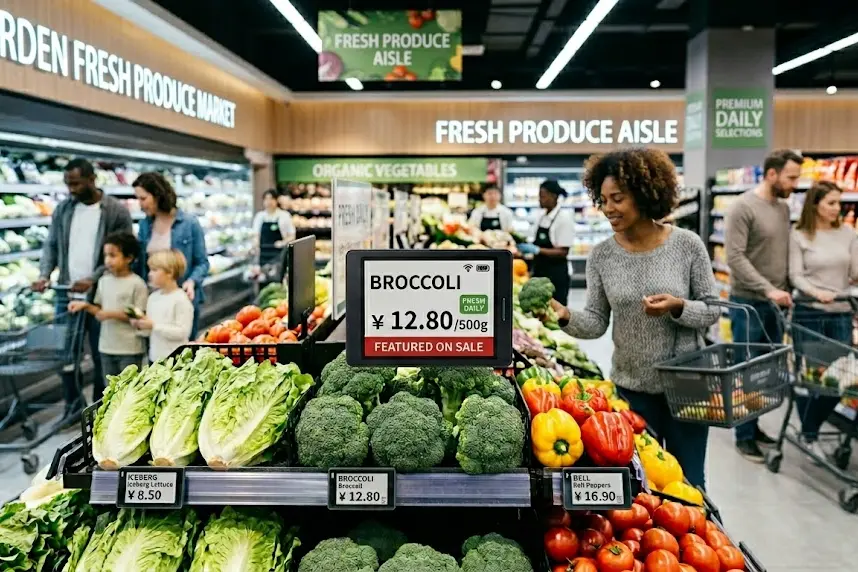
Ileyibhile yeshelufu yombane ayiyomveliso enye. Yinkqubo emine-yomaleko: iyunithi yokubonisa kwishelufa kaloliwe, iigeyiti ezingenazingcingo ezityhala uhlaziyo kwezo ziboniso, iqonga lolawulo elilawula amaxabiso kunye nomxholo, kunye nokudityaniswa kwe-backend nendawo yomthengisi{2}}ye{3}}yentengiso kunye neenkqubo ze-inventri.
Itekhnoloji eboniswayo elawula ukusasazwa kwegrosari yi-e{0}}inki - ikwangumboniso we-electrophoretic osetyenziswa kwi-e{2}}bafundi. E-i-inki izoba amandla kuphela xa umfanekiso utshintsha, yiyo loo nto ubomi bebhetri kwisizukulwana sangoku{5}}ielebhile ziqhuba iminyaka emihlanu ukuya kwesixhenxe ngaphandle kokutshintshwa. Isibonisi sifundeka ngokucocekileyo phantsi kokukhanya kwevenkile nakweyiphi na i-engile, kwaye ukungabikho kwesibane sangasemva kugcina indawo ebonwayo izolile ngendlela izikrini ze-LCD zihlala zingenzi njalo.
Kubathengisi begrosari abavavanya ihardware ngokukodwa, covers both standard e-ink configurations and higher-brightness LCD options for fresh food, wine, and promotional zones where color rendering matters more than energy efficiency.
Uhlaziyo luhamba ngesixokelelwano ngekhonkco eliqikelelwayo. Umphathi wamaxabiso utshintsha ixabiso kwisoftware esembindini - okanye utshintsho luqalwa ngokuzenzekelayo ngumgaqo obotshelelwe kwinqanaba le-inventri, ixesha lemini, okanye ishedyuli yokuthengisa. Iqonga lityhalela olo hlaziyo kwisango elifanelekileyo, elithumela ngaphandle kwamacingo kuyo yonke ileyibhile echaphazelekayo ekugqunyweni. Kwivenkile ene-10,000 SKUs, umjikelo wokuhlaziywa kwexabiso elipheleleyo ugqiba ngaphantsi kwemizuzu emibini kwiinkqubo zangoku. Umsebenzi ofanayo phantsi kokuhamba komsebenzi wephepha uthatha iiyure ezintathu ukuya kwezine zexesha elihambelanayo.
Abathengisi abafuna ujongo oluthe kratya kulwakhiwo lwenkqubo - ukubekwa kwesango, indibaniselwano yesoftware, imigibe yobeko - ingasebenzaukwahlulwa kobugcisa bomaleko wenkqubo ye-ESL for the implementation-level detail this article doesn't cover.
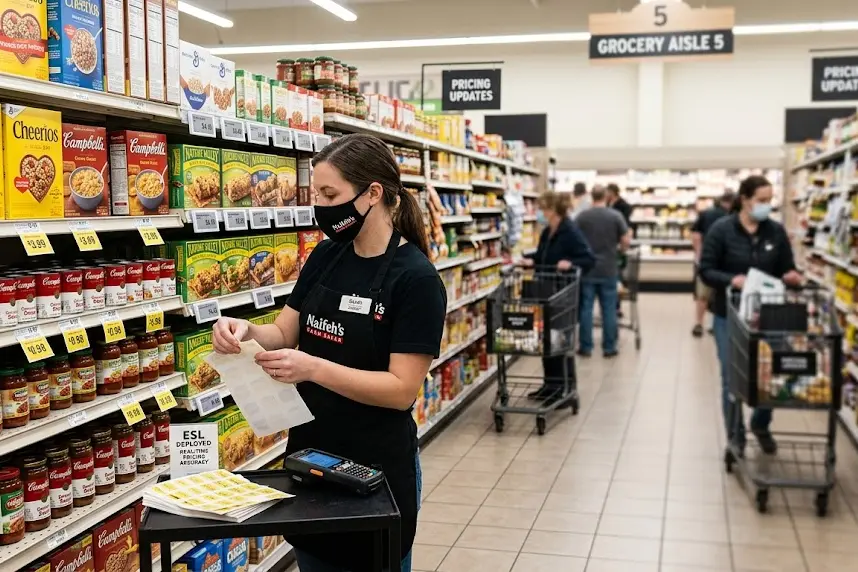
Labor savings on pricing tasks are the most immediate and measurable return. In a mid-size grocery store running a weekly promotional cycle, the cumulative hours spent printing, sorting by aisle, walking, and swapping paper tags consume a significant share of available staff time - and unlike customer service or restocking, none of that work creates revenue or improves the shopping experience.
Elona tyala libhalwe kakhulu nguNaifeh's Cash Saver, igrocer ezimeleyo eCovington, eTennessee. Njengokoinikwe ingxelo yi-NPR, ivenkile yayisebenza ukuya kuthi ga kwi-2,000 yeenguqu zexabiso ngeveki phantsi kwenkqubo yayo yephepha, idla malunga neeyure ze-50 zomsebenzi. Emva kokuthumela ii-ESL, kwaloo msebenzi mnye uye wawa phantsi kwemizuzu emithathu. Iiyure zihanjiswe kwinkonzo yomgangatho kunye nokuzaliseka kwe-odolo.
A vendor-commissioned study by Pricer - one of the major ESL platform providers, so the data should be read with that disclosure in mind - found retailers implementing ESLs saw an average 20% reduction in total in-store labor costs. The pricing-specific effect is more concentrated: in stores with high price-change volumes, the pricing task essentially disappears as a staffing line item. Payback for most mid-size grocery deployments lands in the 12 to 24 month range when labor savings, error reduction, and paper elimination are summed.
Ukuchaneka kwamaxabiso ngumqhubi wesibini omkhulu. Ishelufu -yokujonga ukungangqinelani - apho ithegi ibonisa ixabiso elinye kunye nerejista ikhala enye - ukuvelisa izikhalazo zabathengi, ukuvezwa okusemthethweni kumazwe anemithetho yamaxabiso eyunithi, kunye nelahleko yokuphawula ngokuthe ngqo xa ixabiso eliphantsi kufuneka lihlonitshwe ekuphumeni. I-ESL isusa i-lag eyenza ezo zintlukwano kuba ishelufu kunye ne-POS zitsalwa kumthombo ofanayo wedatha ephilayo. Imixokelelwane yaseYurophu equka i-Auchan kunye neCarrefour ichaze ukuncitshiswa okunokulinganiswa kwiingxabano zokuphuma emva kokukhutshwa.
Umlinganiselo wesithathu we-ROI uthatha ixesha elide ukwenza izinto ezibonakalayo kodwa udibanisa ngokuhamba kwexesha: iphepha kunye nokupheliswa kwezinto ezisetyenziswayo. Ivenkile eqhuba imijikelo yentengiso rhoqo ichitha ngokuqhubekayo kwileyibhile isitokhwe, ukugcinwa komshicileli, kunye nomsebenzi ukulawula ushicilelo{1}}kunye{2}}nokuhlelwa kokuhamba komsebenzi. Emva kokuthunyelwa loo nto yomgca iyanyamalala, kwaye ugcino luyanda kubomi obugcweleyo beleyibhile.
Kubathengisi abafuna ukulinganisa la manani ngokuchasene nenkqubo yabo yamaphepha,ixabiso-lothelekiso olusecaleni lwephepha ngokuchasene neelebhile zombaneuhamba phakathi kwezinto eziguquguqukayo kwisayizi nganye yevenkile.
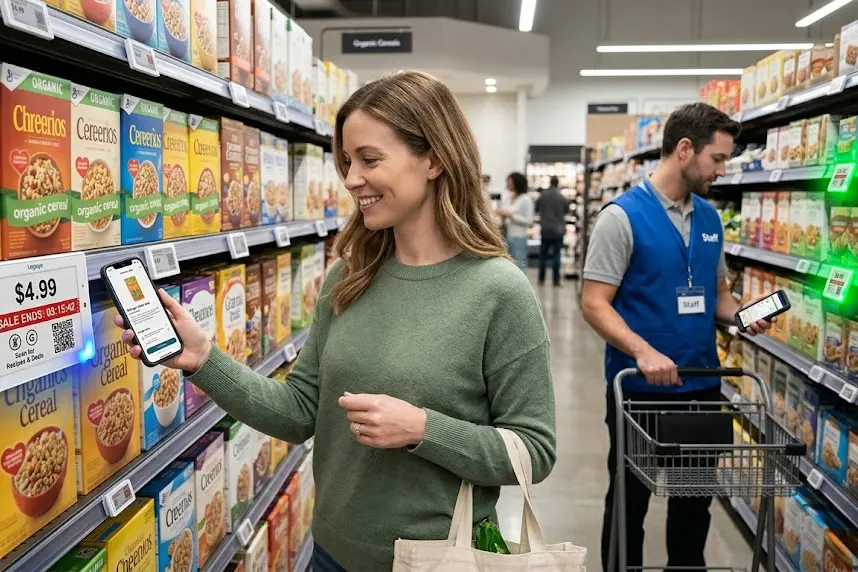
Early ESL deployments used the labels for one thing: showing a price. Current systems are substantially more capable, and the expanded functionality is often what tips the ROI math for mid-size operators who would otherwise find the per-unit hardware cost hard to justify against labor savings alone.
Iimpawu ezibona ukusetyenziswa rhoqo kwemveliso ziquka:
- Amaxabiso okuthengisa kunye nezibali-xesha zokubala - flash sales and time-limited offers run on a schedule, with no associate involvement at shelf level.
- Izibhengezo ze-Allergen kunye nelizwe-lo{1}}lokulebhelishwa kwemvelaphi - compliance information that updates centrally across all affected SKUs, which matters significantly in jurisdictions with specific shelf disclosure requirements.
- Iikhowudi zeQR - linking shoppers to manufacturer pages, recipes, reviews, or loyalty offers pulled up on their own phones, bridging shelf and digital research behavior.
- Iimpawu ze-LED flash- ixhunywe kude yi-app yeselula yomhlobo, ikhokela abasebenzi kwindawo echanekileyo yeshelufu yemveliso yokubuyisela isitokhwe okanye i-odolo ye-intanethi. I-Walmart ibiza oku "khetha ukukhanya" kwaye uyicaphule njengomqhubi ophambili wokwamkelwa komntwana kunye nokugcinwa kwamaxabiso abasebenzi, ngokutsho.Isibhengezo senkampani sika-2024yetyathanga-lokukhutshwa ngokubanzi.
- Stock-izilumkiso zenqanaba - displayed on the label itself, flagging low facings to floor staff without a manual scan or radio call.
- NFC itephu ukusebenzisana- kwiimodeli ezinezixhobo, ukuvumela ifowuni yomthengi ukuba inyuse isiqulatho semveliso eyongeziweyo ngokucofa okukodwa kwendawo yeleyibhile.
Ukukhetha-ukuya{1}}umsebenzi wokukhanya kubaluleke kakhulu njengokucofa{2}}kwaye{3}}ukuqokelela iiodolo kuthatha isabelo esikhulayo sengeniso yegrosari. Ukuhambisa isikhethi ngokuchanekileyo nangokukhawuleza kwivenkile enkulu-yefomatisi itshintshile ukusuka kuncedo ukuya kwimfuneko yokusebenza. Legoyo'sIimodeli zeempawu zedijithali zexabiso le-elektroniki cover the multi-function configurations built specifically for these hybrid pricing-and-fulfillment use cases.
Zeziphi iiFomathi zeSupermarket ezifumana ezona buyiselo zinamandla kwi-ESL
Iithegi zamaxabiso e-elektroniki zizisa imbuyekezo engalinganiyo ngokuxhomekeke kwifomathi yevenkile, ukubalwa kwe-SKU, kunye nokuphindaphindwa kwamaxabiso. Ukubeka ulindelo oluyinyani kule ndawo ngaphambi kokuba ukuhanjiswa kubaluleke ngaphezu kokuba uninzi lwabathengisi bexabisa ekuqaleni.
Enkulu-iivenkile zegrosari ezifomatha - ezigcwele{2}}iivenkile ezinkulu zenkonzo ngaphezulu kwama-25,000 eenyawo ezine-10,000 okanye ngaphezulu ze-SKUs - zimele owona msebenzi unamandla. Indibaniselwano yexabiso eliphezulu leveki{9}lokutshintsha umthamo, imijikelo yentengiso entsonkothileyo, kunye nophawu olukhulu lomzimba ludala iimeko apho ugcino lwabasebenzi lukhulu kwaye lukhawulezayo ukuze lwenzeke. Yiyo loo nto amatsheyini amakhulu athumela ii-ESL emkhulu ngokungafaniyo{11}}ifomathi: i-Walmart, i-Kroger, i-Whole Foods, kunye noogxa babo base-Europe uLidl, i-Carrefour, kunye ne-Auchan zonke zisebenza kwizikali apho izibalo zisebenza ngokucacileyo.
Specialty food retailers - wine shops, cheese counters, organic grocers - make a different but compelling case. These formats often carry high-value products where additional shelf-edge information (origin, tasting notes, pairing suggestions) meaningfully influences purchase decisions. Color ESLs that can render rich content and link to deeper information pages often produce measurable lift in average transaction value, independent of any labor savings argument.
Iivenkile eziluncedo kunye{0}}ezincinci nabasebenzisi befomati bahlala kwindawo enzima. Ngobalo olusezantsi lwe-SKU kunye notshintsho lwamaxabiso oluphantsi, ugcino lwabasebenzi luba buthathaka kwaye ixabiso lenkunzi yelebhile nganye - liba nzima ukulihlawula. Ii-ESL zisahlawula kwezi fomati, kodwa umda wexesha uyanwenwa kwaye ityala lixhomekeke ngakumbi ekuchanekeni kunye nokukwazi ukunyuselwa okuguquguqukayo kunokuncitshiswa kwabasebenzi.
The 2026 ESL Technology Stack: E-Ink, Wireless Protocols, and Software
Imarike ye-ESL iye yadityaniswa kakhulu kule minyaka mithathu idlulileyo. Obona buchwepheshe bubalaseleyo yi-e-i-inki - ngokukodwa isizukulwana sesibini nesesithathu-iphepha e{4}}elixhasa unikezelo olupheleleyo{{5}lombala omane{5}, hayi nje umboniso omnyama{6}}kunye{7}}nomhlophe ochaza ukusetyenziswa kwangethuba. Ubuchule bombala bubalulekile kuba buvumela umxholo wentengiso, uphawu lwemvelaphi, kunye nodidi{9}}umahluko wokubonwayo wenqanaba elingenakho ukunikezela ngaphandle kokuncama ukufundeka.
Wireless communication has stratified by use case. Most current deployments run on 2.4GHz proprietary protocols or 868/915MHz radio frequency bands, chosen for reliability in the dense metal-shelf environments where Wi-Fi degrades. Some enterprise platforms have moved to NB-IoT (Narrowband IoT) for large-campus or multi-building deployments. Gateway infrastructure has gotten simpler - current units typically cover 1,000 to 1,500 labels each depending on label update frequency and the store's RF environment, requiring fewer access points than earlier generations.
The software layer has arguably changed more than the hardware. Modern ESL management platforms function less like label controllers and more like shelf-edge content management systems: scheduling, rule-based automation, API connections to ERP and inventory, analytics dashboards surfacing pricing compliance data and update confirmation logs. Retailers evaluating vendors should scrutinize the software platform with the same rigor as the hardware specs. The integration quality and update confirmation reliability are what determine whether operational gains actually show up in practice.
The vendor landscape has consolidated around a handful of platform providers - SES-imagotag (now VusionGroup), Pricer, Hanshow, and SoluM dominate global volume, with a growing tier of regional and specialist suppliers serving formats the majors don't prioritize. Hardware-focused suppliers like Legoyo work alongside these platforms to deliver display configurations matched to specific retail environments, particularly for retailers wanting more control over hardware sourcing than the major platforms typically allow.
lays out the decision variables in detail.
Ukudityaniswa kwe-ESL kunye ne-POS kunye ne-ERP: Apho uninzi lokusasazwa lukhubeka
The most common failure mode in ESL deployments isn't hardware. It's integration. Specifically, it's the gap between what the central pricing database actually contains and what the retailer assumed it contained.
ESLs display exactly what's in the source data. When that data is clean and well-structured, the system works as advertised. When it isn't - and item master data in grocery operations is notoriously inconsistent - those issues surface immediately on the labels and become highly visible. Inconsistent product descriptions, missing weight or unit fields, non-standardized promotional pricing codes, duplicate SKUs that resolve to different items in different systems: any of these will produce wrong labels at scale on day one.
Ulwakhiwo lokudibanisa ngokwalo lukhulile. -Iziqhagamshelo ezakhelwe ngaphambili kwiinkqubo eziqhelekileyo ze-ERP - i-SAP yokuThengisa, i-Oracle Retail Merchandising, i-Lightspeed, i-Microsoft Dynamics 365 yoRhwebo - iyafumaneka kuninzi lwababoneleli beqonga abaphambili kwaye isusa i-chunk ebalulekileyo yomngcipheko wokudibanisa. Abathengisi abaqhuba isiko okanye iinkqubo zePOS ezindala kufuneka balindele uhlahlo lwabiwo-mali lophuhliso lwe-middleware okanye umjikelo omde wokudibanisa. Isiqwenga esinexabiso loxinzelelo{7}}lovavanyo ngexesha lokuvavanywa komthengisi kukuhamba kokuqinisekiswa kohlaziyo: xa ixabiso litshintsha kwisixokelelwano somthombo, iqonga kufuneka liqinisekise ngokuqinisekileyo ukuba zeziphi iilebhile ezihlaziyiweyo, ezingazange, kwaye kutheni. Ukugawulwa kwemithi okuthembekileyo kulo mlinganiso yimfuneko yolawulo kwiindawo ezininzi kunye yimfuneko yokusebenza yokulawula ivenkile enkulu{9}}yefomati kwisikali.
The reverse direction matters too. Mature deployments push data back from the ESL platform into business intelligence layers - pricing compliance rates, label-level update success metrics, dynamic promotion performance - turning what was a passive display layer into an active source of operational data.
Retailers who see the strongest returns share a common pattern: they treated implementation as a systems integration project, not a hardware purchase. The labels are the visible part. The operational value lives in how cleanly the platform connects to existing pricing and inventory systems, and in how well staff are trained on the new workflows.
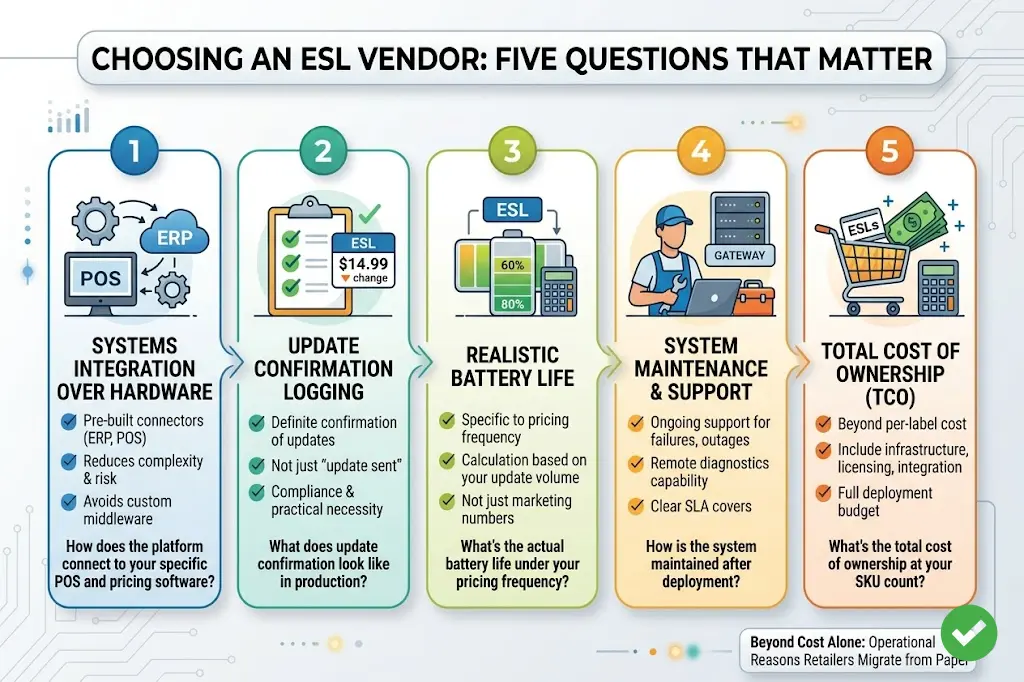
The five questions worth pressure-testing before committing:
- Iqonga linxibelelana njani nePOS yakho ethile kunye nesoftware yamaxabiso?{0}Iziqhagamshelo ezakhiwe ngaphambili kwi-ERP yakho zinciphisa ngokumangalisayo ukudityaniswa kobunzima kunye nomngcipheko. Inkqubo efuna i-middleware yesiko yongeza iindleko, ixesha, kunye nomthwalo wokulondoloza okuqhubekayo.
- Enterprise deployments need to know definitively which labels updated and which didn't - not just that an update was sent. Confirmation logging is a compliance requirement in many jurisdictions and a practical necessity for stores running frequent scheduled changes.
- Manufacturers quote battery life under standard-use assumptions. A store running six price changes per day per label drains batteries materially faster than one running two. Get the calculation specific to your update volume rather than the marketing number.
- Ukusilela kweleyibhile, ukuphuma kwesango, uhlaziyo lwesoftware - zonke ezi zifuna inkxaso eqhubekayo. Vavanya amandla okuxilonga okude, inkqubo yokutshintshwa kwehardware, kunye nokuba yintoni eneneni i-SLA igubungela ngokubhaliweyo.
- Per-label hardware cost is the starting point, not the full number. Add gateway infrastructure, installation labor, software licensing, integration work, and ongoing support to get a realistic deployment budget before comparing vendor quotes head-to-head.
covers the broader argument independent of any specific vendor framework.
The environmental argument has gained traction as retailers face ESG reporting requirements and consumer pressure on sustainability commitments. A single mid-size supermarket running weekly promotional cycles can generate tens of thousands of paper label changes per year - paper printed, handled, and discarded within days. At chain level, the volume becomes material.
E-ink labels consume power only when the display content changes; between updates, draw is zero. Hardware is built for multi-year operational life before end-of-life disposal becomes relevant, and most current-generation labels are designed with recyclability in mind. Dynamic pricing enabled by ESLs also reduces food waste: a IYunivesithi yaseCalifornia, iSan Diego Rady School of Management study found that automated markdown pricing on perishables approaching expiration reduced food waste by up to 21% - a result with direct financial and sustainability implications for grocery operators.
Kubathengisi abakha ityala lozinzo kunye nengxoxo yokusebenza kakuhle, ukupheliswa kwephepha, ukusebenza kakuhle kwamandla, kunye nokunciphisa inkunkuma kunye kuvelisa umnikelo othembekileyo olinganisekayo olinganisa ngokucocekileyo kwizicwangciso ze-carbon accounting.
Most successful supermarket ESL deployments follow a phased approach rather than a single store-wide rollout. Starting with one or two high-velocity departments - typically the perimeter (deli, bakery, produce) or center-store categories with the highest weekly price-change volume - gives the implementation team time to validate POS integration, establish staff workflows, and identify data quality gaps before expanding system-wide.
Iipateni ezintathu zahlula izixhobo ezihamba kakuhle kwezi zingasebenziyo:
Yenza uphicotho lwedatha ngaphambi kokuthunyelwa, hayi ngexesha.Abathengisi abaphatha ukucocwa kwedatha njengemeko yangaphambili bahlala bephepha esona sizathu sixhaphakileyo sokuhamba{0}} kolibaziseko. Ukuhamba i-SKU master, iyunithi yokujonga kunye nobunzima bokuhambelana, ukulinganisa ikhowudi yokuthengisa izakhiwo - akukho nanye kulo msebenzi oncomekayo, kwaye yonke into ihlawula okwethutyana iilebhile ziphila.
Cwangcisa ukuchazwa ngokutsha kwendima yabasebenzi, hayi uqeqesho kuphela. The associates who managed the print-and-swap workflow now operate on an exception-based model: their work shifts from executing every price change to monitoring update success and handling the small percentage that fail. Stores that frame the change as redefinition rather than just learning new buttons report faster adoption and higher staff satisfaction with the system.
Don't underestimate the gateway placement walk. RF environments in supermarkets are unforgiving - metal shelving, refrigerated cases, and overhead infrastructure all degrade signal in ways that don't show up in coverage modeling. Deployments that include a physical site survey before gateway placement consistently avoid the dead-zone problems that surface a month after go-live and require expensive rework. igubungela iinguqu zokubekwa ngobunzulu ngaphezu koxwebhu oluninzi lomthengisi lubonelelayo.
The retailers who get this right treat the first 30 days post go-live as a calibration window rather than a finish line. Update success rates, battery drain telemetry, and staff feedback all need active attention during that window. The deployments that go quiet after rollout are the ones that surface problems six months later as compounded operational debt.
- Unciphiso lwabasebenzi: Pricing-related associate hours cut substantially in high-SKU grocery environments, with documented cases reducing 50-hour weekly tasks to under three minutes.
- Shelf and POS synchronized from a single live data source, eliminating checkout discrepancy disputes.
- Ubuchule bokuthengisa: Flash sales, time-limited markdowns, and chain-wide rollouts execute automatically on schedule.
- Ukupheliswa kwephepha kunye noshicilelo: Ongoing consumables cost removed; savings compound over the hardware lifecycle.
- Idatha yokusebenza:Hlaziya iilogi zokuqinisekisa, i-telemetry yebhetri, kunye nokulandelwa kokuthotyelwa kwamaxabiso okwakhelwe eqongeni.
- Uzinzo:Inkunkuma yamaphepha isusiwe; e{0}i-inki itsala iqanda elinguziro phakathi kohlaziyo; Ukumakishwa okuzenzekelayo okutshabalalayo kunciphisa inkunkuma yokutya ukuya kuthi ga kwi-21%.
- Expanded shelf-edge functionality: Allergen info, QR codes, LED pick-to-light, NFC interaction - all centrally managed.
- Multi-location consistency:Uhlaziyo olunye lusasazwa kuzo zonke iivenkile ezikwinethiwekhi ngaxeshanye.
Most current-generation e-ink shelf labels run five to seven years under typical supermarket conditions - defined as roughly two to four price updates per day per label. Stores with significantly higher update frequency (daily perishable markdowns across thousands of SKUs, for instance) should request a battery life calculation specific to their expected update volume from any vendor they evaluate. Battery life is one of the most commonly misquoted specs in vendor materials, and the difference between "up to 7 years" and "7 years at your pricing frequency" can be substantial.
Electronic shelf labels retain their last displayed content indefinitely without power - the e-ink image is static and requires no energy to maintain. If the central management system or gateway goes offline, existing labels keep showing the last updated price. The operational risk isn't blank displays; it's the inability to push new updates during the outage. Enterprise deployments mitigate this with gateway redundancy, local update buffering, and SLA-backed uptime guarantees from the platform vendor - material factors to evaluate during vendor selection, particularly for stores with frequent scheduled promotional changes.
Do electronic price tags support dynamic pricing - and what are the regulatory considerations?
ESLs technically enable dynamic pricing in the sense that prices can be changed at any frequency without manual intervention. Whether a retailer uses that capability for genuine surge pricing is a separate business and regulatory question. In 2024, about ESLs enabling grocery price gouging, and both Walmart and Kroger have publicly stated they don't use the technology for demand-based price increases. In practice, most supermarket operators use the dynamic pricing capability for scheduled promotions, perishable markdowns, and competitive price matching - not real-time demand adjustments. Retailers implementing ESLs should review applicable state price-posting laws and unit pricing requirements; compliance obligations differ by jurisdiction.
What is the typical deployment cost for a mid-size supermarket?
For a mid-size supermarket with roughly 10,000 SKUs, hardware costs for the labels themselves typically range from $15 to $25 per unit at current market pricing. Gateway infrastructure, software licensing, and installation bring the total deployment meaningfully higher - full-store implementation at that scale commonly lands in the $150,000 to $250,000 range before integration work, depending heavily on the existing POS architecture. The labor savings case at that SKU count, combined with paper and consumables elimination, typically produces a payback period of 18 to 24 months. Stores with higher price-change frequencies recover costs faster; lower-velocity formats take longer. Retailers wanting to model their own numbers can work through the per-store math comparing paper and ESL systems at varying scales.
Which display technology is better for supermarkets - e-ink or LCD?
E-ink is the dominant choice for general grocery shelving because of battery efficiency, readability under varied lighting, and long hardware life. LCD shelf labels offer higher brightness and full-motion content capability, making them better suited to promotional endcaps, wine and specialty sections, and high-visibility positions where color vibrancy and video content justify the higher power consumption and more frequent battery management. Most large-format supermarket deployments use e-ink for the majority of shelf positions and selectively place LCD or larger-format screens at high-impact promotional locations. Legoyo's covers both technologies across standard grocery sizing and specialty configurations.
Underestimating data quality requirements. Hardware almost never causes deployment failures; integration with messy item master data does. The retailers who run a thorough SKU data audit before go-live - checking unit consistency, weight fields, duplicate codes, and promotional pricing structure - consistently get to a clean rollout. The ones who treat data cleanup as something to handle during deployment end up with labels showing wrong information at scale on day one, and the recovery is far more expensive than the upfront audit would have cost. The second-most-common mistake is skipping the gateway placement walk and relying entirely on coverage modeling, which never accounts for how much grocery RF environments degrade signal in ways software predictions miss.
How do ESLs integrate with multi-store chains running different POS systems?
Most enterprise ESL platforms handle this through abstraction layers - pricing data flows from each store's POS into a normalized format the ESL platform consumes, regardless of the underlying source system. Pre-built connectors exist for SAP, Oracle Retail, Microsoft Dynamics, and most major regional retail ERP systems. Chains running mixed environments (legacy systems alongside modern cloud platforms) typically need a phased integration approach, prioritizing stores on standardized POS platforms first and bringing legacy stores in once middleware is validated. Multi-function shelf-edge displays compatible with multiple platform standards help reduce hardware dependency on any single ESL software vendor, which matters for chains protecting against future platform consolidation.